Dunkin’ India Franchise Transition Remains a Major Story as Jubilant FoodWorks Prepares Exit
Dunkin’ India is not necessarily leaving the market—it is potentially entering a new phase, with Jubilant FoodWorks preparing to exit and a new franchise partnership potentially emerging after December 2026.

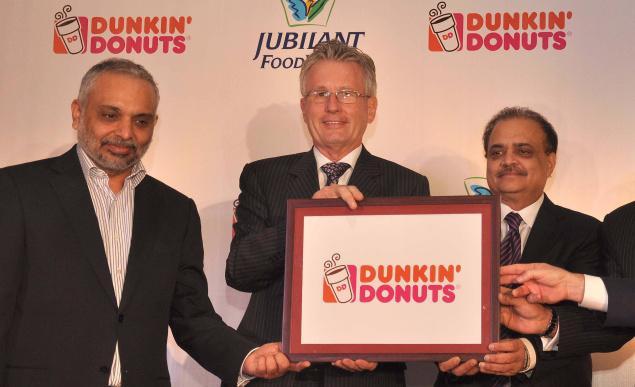
Dunkin’ India is entering a major franchise transition as Jubilant FoodWorks prepares to end its development agreement at the close of 2026. With reports linking Graviss Group to discussions with Dunkin’s parent Inspire Brands, the next phase could determine whether the global coffee-and-doughnut brand gets a fresh opportunity in India.
A 15-Year Franchise Partnership Nears Its End
Jubilant FoodWorks brought Dunkin’ to India in 2012 under a Multiple Unit Development Franchise Agreement signed in February 2011. The brand initially expanded rapidly, reaching more than 70 outlets within its early years.
However, the business subsequently faced challenges around store productivity, consumer frequency, operating costs and the suitability of its standalone coffee-and-doughnut proposition for the Indian market.
On March 30, 2026, Jubilant FoodWorks announced that it would not renew its Dunkin’ development rights when the existing agreement expires on December 31, 2026. The company said it would evaluate an orderly and phased rationalisation or cessation of operations, asset transfers and potentially the assignment or transfer of franchise rights in consultation with Dunkin’s brand owners.
By the end of FY2025, Dunkin’ had only 27 stores in India.
The Numbers Behind Dunkin’s India Challenge
Jubilant's regulatory disclosure provides a clear picture of the scale of the business within its overall portfolio.
| Indicator | Dunkin’ India |
|---|---|
| FY2024–25 Revenue | ₹37.24 crore |
| Share of Jubilant FoodWorks revenue | 0.61% |
| FY2024–25 Profit After Tax | Loss of ₹19.12 crore |
| Stores | 27 |
| Current development agreement expires | December 31, 2026 |
Dunkin’ contributed just 0.61% of Jubilant FoodWorks’ FY2024–25 revenue, while its loss represented approximately 9.85% of Jubilant FoodWorks’ consolidated profit after tax for that year. NSE India
Jubilant subsequently classified Dunkin’ as a discontinued operation in its financial reporting. For FY2026, Dunkin’ recorded a net loss of approximately ₹23.63 crore after tax, according to the company's results.NSE India
Importantly, the exit is relatively small in the context of Jubilant FoodWorks’ wider business. The company continues to expand its other brands, particularly Domino’s and Popeyes.
Why the Original Model Struggled
Dunkin’s India experience highlights a fundamental challenge in international franchising: global brand recognition does not automatically translate into local market success.
The original proposition centred heavily on coffee, doughnuts and quick-service consumption. In India, the standalone model struggled to generate the frequency required to support the economics of a large store network.
Jubilant attempted several adaptations, including closing weaker locations and moving towards smaller formats such as kiosks and takeaway outlets.
The broader lesson for international franchise brands is that entering India requires more than simply importing an established global concept.
Successful localisation may require:
- Menu adaptation to Indian preferences
- Multiple consumption occasions
- Competitive pricing
- Flexible store formats
- Strong delivery economics
- Careful location selection
- Sustainable store-level profitability
Who Could Take Dunkin’ India Forward?
The next phase becomes particularly interesting because Dunkin’s global parent, Inspire Brands, remains interested in the Indian market.
According to a July 2026 report, Graviss Group, the Indian operator of Baskin-Robbins, has been in discussions with Inspire Brands regarding the potential acquisition of Dunkin’s India franchise rights. The discussions have not been publicly confirmed as a completed transaction. Outlook Business
Graviss already has significant experience operating an international food brand in India. Its Baskin-Robbins business has grown to more than 800 outlets across 230 cities, alongside approximately 5,000 retail points of sale.Outlook Business
That existing infrastructure could potentially provide advantages in areas such as supply chain, manufacturing, distribution and retail execution.
A Potential Dunkin’ Relaunch
If a new agreement with Graviss or another operator is eventually completed, Dunkin’ could potentially receive a significant strategic reset.
Reports around the discussions have pointed towards a broader proposition, potentially incorporating Indianised desserts, sugar-free options and an expanded food menu rather than relying predominantly on coffee and doughnuts. Outlook Business
A future Dunkin’ India model could therefore focus on several consumption occasions:
Breakfast → Coffee → Snacks → Bakery → Desserts → Evening beverages
That would give the brand more opportunities to generate repeat visits and increase the average customer relationship beyond an occasional doughnut purchase.
What a New Franchise Partner Would Need to Change
1. Build more consumption occasions
Dunkin’ would need to become more than an occasional indulgence. Breakfast products, savoury items, sandwiches, bakery products and beverages could help increase visit frequency.
2. Localise without losing the global identity
Indianisation should not simply mean adding a handful of local flavours. The entire menu architecture, pricing and product mix need to reflect local consumption patterns while retaining Dunkin’s international identity.
3. Adopt flexible store formats
Large cafés may not be suitable for every location. Compact cafés, kiosks, mall counters, high-street outlets and delivery-led formats could provide greater flexibility.
4. Focus on unit economics
The next operator will need to prioritise profitable stores rather than rapid outlet growth.
Key metrics would include sales per store, rent-to-sales ratio, labour costs, gross margins, delivery contribution and payback period.
5. Sharpen the brand positioning
Dunkin’ needs a clear answer to a basic question:
Is it primarily a doughnut brand, coffee chain, bakery café or QSR?
A clearer positioning could influence everything from menu development to store design and marketing.
The Bigger Franchise Industry Lesson
Dunkin’s transition is significant beyond the brand itself.
It demonstrates how international franchise brands entering India are increasingly being judged on unit economics, localisation and operational execution, rather than simply the strength of their global name.
For franchisors, choosing the right local partner is only the beginning. Franchise agreements also need to establish clear expectations around:
- Development timelines
- Investment commitments
- Marketing
- Supply-chain infrastructure
- Menu localisation
- Store formats
- Underperforming outlets
- Renewal terms
- Exit and transfer provisions
For prospective franchise operators, the case is equally relevant. A famous international brand does not automatically mean a profitable franchise opportunity.
Before investing, franchisees need to examine customer frequency, average ticket size, rent, margins, supply-chain requirements, competition and realistic multi-unit economics.
Dunkin’ India: A Second Chance?
Jubilant FoodWorks’ exit does not necessarily mean Dunkin’ is leaving India.
Instead, 2026 could mark the end of one operating chapter and the beginning of another.
The current development agreement expires on December 31, 2026, while discussions around a potential new partner have been reported but remain subject to commercial negotiations and formal agreements.NSE India
The opportunity for the next operator will be to learn from the first 15 years rather than simply replicate them.
For Dunkin’, the question is no longer just how many stores it can open in India. The bigger question is whether a new partner can create a locally relevant, repeat-driven and economically sustainable business model.
And that makes the Dunkin’ transition an important case study for the wider Indian QSR and franchise industry.
The Weekly Franchise Briefing
A curated roundup of the latest Indian and international franchise news, market trends, and brand announcements — straight from the Franchise News Desk.